MARGAO
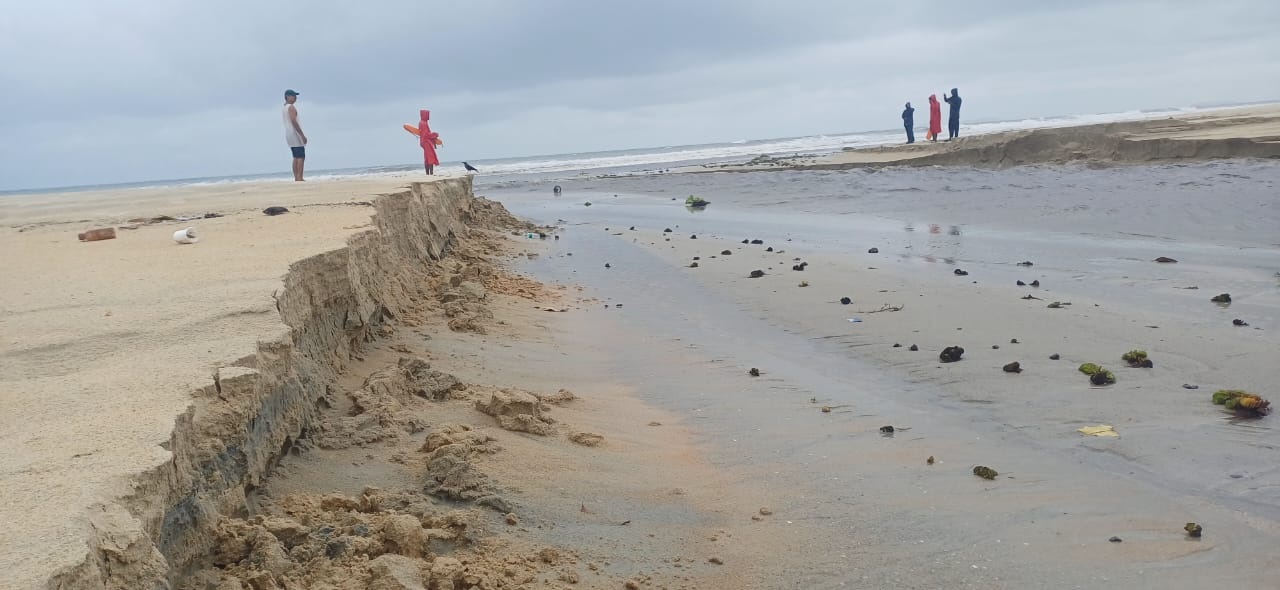
As roaring waves lashed the Colva coastline, heralding the onset of the southwest monsoon in Goa, the iconic beach began witnessing its annual transformation, with rain-fed waters from the Colva creek cutting through the sand bar at its mouth and flowing into the Arabian Sea.
A visit to the world-famous beach on Monday revealed significant changes along the shoreline as monsoon conditions intensified across the state. The seasonal phenomenon of the Colva creek breaching the sand bar was clearly visible, with large volumes of rainwater carving a channel through the accumulated sand and finding its way into the sea.
Local residents said the cutting of the sand bar is a regular feature during the monsoon months, occurring when the increased flow of water from the creek gains momentum following sustained rainfall.
“The creek naturally opens up during the monsoon as rainwater pressure builds up. This allows the water to flow freely into the sea,” said a local resident, pointing to the widening breach at the creek mouth.
The coastline also showed signs of erosion, with sections of the beach losing sand as rough seas and high tides pounded the shore. Adding to the changing landscape, the sea has deposited sizeable quantities of waste along the beach belt, including green waste and other vegetation.
Locals noted that such deposits are typically observed during the early phase of the monsoon, when rough seas wash vegetation and floating material carried by currents ashore.
The annual reshaping of the Colva coast serves as a reminder of the powerful natural processes at work during the monsoon season. While the beach undergoes visible changes every year, residents say the phenomenon is part of the coastal ecosystem’s natural cycle and highlights the dynamic relationship between the sea, the creek and the shoreline.