MARGAO
Margao, Goa’s commercial capital, is not only the nerve centre of trade and commerce in the state’s south district but also the hub of wholesale food business catering to large parts of Goa.
From fish to fruits and vegetables, traders and vendors from across the state converge on the bustling city every day for bulk purchases that eventually reach kitchens and markets in every taluka.
In fact, locals often remark that while most Madgavkars are still asleep, business activity in the city’s wholesale markets begins long before dawn. Trading in fish and fruits starts as early as 3 am, with vendors arriving from different parts of Goa to procure fresh stock and return to their hometowns before sunrise.
However, amid the hectic trade and daily movement of food products into the city, a critical question continues to trouble consumers and citizens alike: Are the fish, fruits and vegetables entering the markets being regularly tested by competent food safety authorities?
Formalin scare still fresh
The concern assumes significance in the backdrop of the infamous formalin-in-fish controversy that shook Goa in 2018, when random testing conducted by an officer of the Food and Drugs Administration reportedly detected traces of formalin in fish sold at the Margao wholesale fish market. The episode had triggered widespread panic among consumers, leading to intensified inspections and temporary restrictions on fish imports from neighbouring states.
Even years after the controversy, apprehensions over food safety continue to persist. Citizens and activists have repeatedly alleged that certain pockets in and around the city are being used for artificial ripening of fruits such as bananas and mangoes.
Food testing lab yet to take off
Against this backdrop, the demand for a fully equipped food testing facility in Margao has grown stronger over the years. Recognising the need for regular monitoring of food products entering Goa’s largest wholesale market, the government had announced plans for a state-of-the-art food testing laboratory in the city.
The proposed laboratory was expected to ensure that fish, fruits and vegetables sold in Goa conform to prescribed food safety and quality standards. The facility was also projected as a major step toward safeguarding public health and boosting consumer confidence.
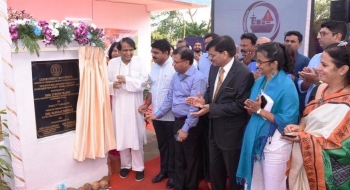
In a much-publicised event on January 27, 2019, former Union Minister Suresh Prabhu had inaugurated what was announced as a food testing laboratory at the South Goa Planning and Development Authority Market complex, which houses the retail fish, fruit, vegetable and meat market. The laboratory was proposed to be established by the Export Inspection Agency.
However, despite the inauguration ceremony and official announcements, the laboratory never became operational. Years later, the promised facility remains non-existent, raising questions over the delay and the fate of the ambitious project.
Concerns over monitoring mechanism
Officials from the FDA now maintain that fish entering the Margao wholesale fish market from neighbouring states is subjected to formalin testing before trading begins each day. Yet, concerns remain over the absence of a robust mechanism for regular and random testing of fruits and vegetables entering the city from outside Goa. Consumer groups argue that while fish testing has improved after the formalin scare, monitoring of fruits and vegetables continues to be inadequate despite recurring allegations of chemical ripening and pesticide contamination.
With thousands of consumers dependent on Margao’s wholesale markets every day, citizens say the need for a fully functional food testing laboratory has become more urgent than ever. Many believe that without scientific and continuous monitoring of food products, assurances of food safety will remain incomplete.