Header
TUESDAY, 23 JUNE 2026

CYBERTECH | Jensen Huang’s AI PC bet

Published Jun 4
SHARE ON
CYBERTECH | Jensen Huang’s AI PC bet

PANAJI

Nvidia’s chief executive, Jensen Huang, believes the future of personal computing will be defined not by faster processors alone, but by artificial intelligence running directly on users’ devices. At Computex in Taipei, Huang unveiled Nvidia’s RTX Spark processor, a chip designed to bring advanced AI capabilities to laptops and desktop computers without relying heavily on cloud infrastructure.   

The concept of the “AI PC” has become one of the technology industry’s most closely watched trends. These machines combine traditional computing power with specialised AI processors capable of running digital assistants, automating workflows, and executing increasingly sophisticated AI applications locally. Proponents argue that this approach offers lower latency, greater privacy, and reduced dependence on remote data centres.   

For Nvidia, the initiative represents a strategic expansion beyond its dominant position in AI training chips. As businesses and consumers adopt generative AI tools, demand is expected to shift towards inference”the process of generating responses and carrying out tasks in real time. Huang sees AI PCs as a crucial part of that transition.   

Yet enthusiasm has not translated uniformly into sales. While some manufacturers report growing demand for AI-enabled devices, others remain cautious, citing uncertain consumer appetite and higher hardware costs. The industry still faces the challenge of convincing buyers that AI features justify the premium price.   

Nevertheless, Huang’s vision is clear. He argues that AI PCs will transform computers from passive productivity tools into intelligent digital collaborators, potentially reshaping the personal computing market over the coming decade. 

Recommended Stories

Published Jun 4
SHARE ON

CYBERTECH | China’s brain-chip breakthrough

The Goan Network
Published Jun 4
SHARE ON
CYBERTECH | China’s brain-chip breakthrough

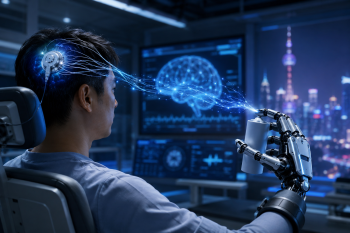
PANAJIChina has moved to the forefront of brain-computer interface (BCI) technology, becoming the first country to approve a commercially available brain implant designed to restore hand movement in people with paralysis. According to MIT Technology Review, the approval marks a pivotal moment in the race to translate brain-chip research from laboratories into real-world medical applications.   The device, developed by Shanghai-based Neuracle Medical Technology,…

Read more

Keep Reading — More from THE GOAN SPECIAL

2 more related stories queued · tap to continue reading

Home HOME News GOA NEWS Global GLOBAL GOENKAR Search SEARCH
The Goan Footer