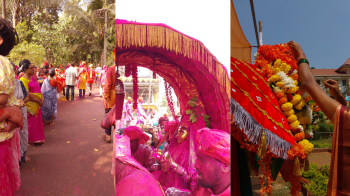
Bedecked in pink, the Devi sits gracefully in her palanquin, accompanied by the 12 Sotreo and throngs of devotees, young and old. The procession begins around noon, with showers of gulaal thrown over the palanquin as people of all ages join in the celebration. The air is thick with music and colour as devotees make their way along the traditional route, which begins with a gentle slope under the scorching sun. The Goddess pauses at various waddos, allowing devotees to seek her blessings. Women, dressed in their finest attire and holding traditional oti, await her arrival with eager anticipation.
Kumudini Desai moves briskly from one gas stove to another in the kitchen. Around her, the house is already stirring with activity. She pauses briefly to glance at the swing nearby, checking whether the bundle of white shirts and orange topis is ready, the traditional attire worn by those who will soon join the procession.
“There’s a special energy in the air,” she says with a smile. But for Kumudini, everything ultimately revolves around one thing. “The preparations start very early, and deciding the naivadya for the day is always our biggest task, and our main worry is to have the naivadya ready on time,” she says firmly. “Nothing happens without it.”
The procession slowly moves toward Cuncolim. Here, faith unites everyone in the colours of gulaal, as devotees from all communities gather to catch a glimpse of their beloved Devi and Mamai Saibinn, the name by which the Catholic community reveres her, all dressed in pink and red, offering their prayers and seeking blessings.
“We believe in her and respect her deeply,” shares Justina Piedade. “She is our Saibinn. My mother prayed here, now I do, and someday my daughter-in-law will continue.” She offers cold watermelon, water, and drinks to devotees passing her house. “Aamge Saibinn Maai ti,” she says, her eyes reflecting pure devotion.
The carriers of the 12 Sotreo dance to the drums’ vibrant rhythms, a sight that captivates all. After blessing her devotees and visiting her original home, retracing the path she took years ago when moving to Fatorpa, the Goddess Shantadurga begins her journey back. Legends say the palanquin grows heavier on the return, carrying the weight of separation.
Late at night, exhausted, grateful, and blessed, the devotees return home, yet the celebration continues. Music, dancing, and colours fill the air as dhulpet begins, with everyone applying gulal to one another. Here, differences fade, and faith and festivity bring everyone together.