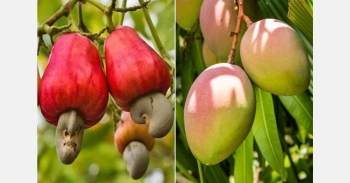
Mild unseasonal showers in January and February are said to have disrupted cashew flowering, and many growers have raised concern that yields most likely will drop in comparison to last year (2025).
The State government has responded by announcing the creation of the Goa State Cashew Board, backed by a Rs 2 crore allocation in the 2026“27 budget. The Board will provide price support and in future develop improved varieties through “Mother Blocks” at government farms in Kodar and Kalay.
Chief Minister Pramod Sawant, while presenting the budget last week, emphasized the government’s commitment.
The cashew sector, which employs thousands in processing units, is seen as critical to rural livelihoods.
In contrast, mango growers are optimistic.
The prized Mancurad and Alphonso varieties have shown strong flowering this season, thanks to stable late-winter temperatures.
However, early pre-monsoon showers in April or May could still trigger fruit drop, tempering expectations.
Other seasonal crops are holding steady. Kokum production remains stable, buoyed by rising demand for kokum-based beverages and extracts.
Jackfruit yields are moderate, but growing interest in jackfruit as a plant-based meat substitute is opening new market opportunities.
Spices such as nutmeg and pepper continue to thrive in niche export markets.
The Agriculture department’s overall budget for 2026“27 stands at Rs 293 crore, covering watershed projects, community farming, and digital farmer IDs.
But farmer cooperatives remain cautious.
“Subsidies alone won’t solve the problem. We need long-term climate-resilient practices,” said a cooperative leader in South Goa.
As Goa’s farmers brace for another unpredictable season, the State’s horticulture farmers' story in 2026 continues to be one of resilience -- balancing tradition with adaptation in the face of unpredictable weather events and the longer term climate change phenomenon.