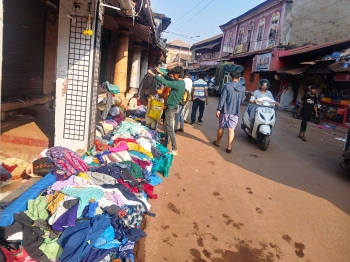
Vendors lined the roadside footpaths and even spilled onto the main carriageway, displaying second-hand readymade garments, footwear, and assorted household items. The encroachments severely narrowed the road space, worsening traffic congestion in one of the town’s busiest corridors.
What stands out is the apparent inaction of enforcement agencies. Neither the Margao police nor municipal officials were seen intervening to regulate or disperse the illegal roadside trade. This comes despite the bazaar’s history of controversy and repeated complaints from local residents and commuters.
In earlier years, the Sunday market had gained notoriety after stolen goods were reportedly found being sold at the bazaar. Several theft cases were cracked when missing items surfaced among the wares on display along the station road. Following such incidents, police had periodically carried out drives to curb the activity and prevent the sale of illicit goods.
However, the nature of the bazaar appears to have evolved in recent months. While a few vendors still deal in electronic and consumer items, the majority now focus on clothing”both new and second-hand”suggesting a shift toward less conspicuous merchandise. Even so, questions remain about the source and regulation of these goods.
Sources indicate that the bazaar is not entirely spontaneous but operates in a coordinated manner. Vendors, many of them migrants, are believed to assemble only after receiving cues from organisers who manage the weekly setup. This has led to speculation about an informal network facilitating the market’s continued presence despite its illegality.
With no visible enforcement and growing footfall, the Sunday bazaar continues to flourish, laying bare the authorities’ failure to effectively address the issue. Residents and motorists alike are left grappling with traffic snarls and safety concerns, even as the weekly market keeps its steady date with Margao’s streets.